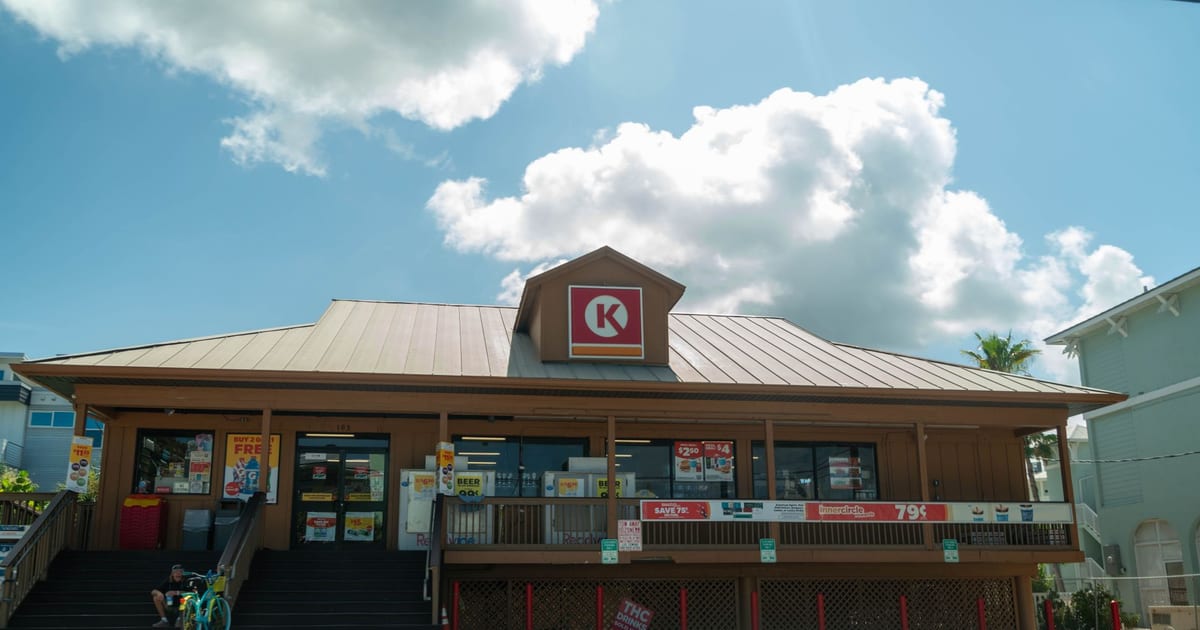
What is triple net lease investing? Triple net lease investing is the practice of owning commercial property leased to a tenant who pays the property taxes, the building insurance, and the maintenance costs on top of base rent. The landlord collects rent and carries far fewer operating obligations than the owner of an apartment building or a multi-tenant office. That structure is why single-tenant net lease sits at the conservative end of commercial real estate, and why it shows up so often in portfolios built for income rather than for appreciation.
Net lease is also one of the easier corners of the market to misread, because two listings using the same letters can describe different obligations. This guide covers what the tenant actually takes on, how the four common net lease structures differ, where the income can break, and how a passive investor reaches these assets without buying a building alone. If you are earlier in the process than that, start with a beginner's guide to commercial real estate investing.
Key Takeaways
- Triple net means the tenant pays property taxes, building insurance, and maintenance on top of base rent, leaving the landlord in a largely passive position.
- The letters matter: single net covers taxes, double net adds insurance, triple net adds maintenance, and absolute net removes the landlord's roof and structure duty too.
- Predictable describes the shape of the obligation, not a promise about outcomes. A lease is a contract, and a contract is only as strong as the tenant behind it.
- Tenant credit, guaranty structure, and store-level rent coverage protect net lease income more than the building itself ever does.
- Remaining lease term drives both the income runway and the exit, because the next buyer underwrites the years that are left, not the years already collected.
| Single net (N) | Double net (NN) | Triple net (NNN) | |
|---|---|---|---|
| Property taxes | Tenant | Tenant | Tenant |
| Insurance | Landlord | Tenant | Tenant |
| Maintenance (CAM) | Landlord | Landlord | Tenant |
| Roof and structure | Landlord | Landlord | Landlord |
Illustrative arithmetic to show the mechanism, not market data.
What Does Triple Net Actually Transfer to the Tenant?
A triple net lease transfers three categories of cost to the tenant: real estate taxes, insurance on the building, and maintenance of the property. The tenant pays those directly or reimburses the landlord for them. Base rent sits on top and is meant to reach the owner without being eaten by operating expenses.
The practical effect is a different job description for the owner. In a multi-tenant strip center or an apartment building, the owner is running a small operating business: chasing vendors, budgeting for turnover, absorbing tax reassessments and insurance renewals. In a triple net structure, most of that moves across the table. A tenant like Dollar General, AutoZone, or Tractor Supply signs a long lease on a building it intends to run as a store, and it handles the building the way an operator handles a location it depends on.
Two cautions belong here immediately. First, "triple net" is a market term, not a legal standard. The lease document governs, and the lease is where you find out whether the roof, the structure, and the parking lot are the tenant's problem or yours. Second, transferring cost is not the same as transferring risk. If the tenant stops paying, the taxes and the insurance do not stop coming due. They land back on the owner along with an empty building, which is the single most important thing to understand about this asset class before anything else.
This is also why net lease underwriting looks less like real estate analysis and more like credit analysis. The physical asset matters, but the durability of the income depends mostly on who signed.
Single Net, Double Net, Triple Net, and Absolute Net
Four structures show up repeatedly, and they differ by how many operating cost categories move to the tenant and whether the landlord retains responsibility for the roof and the structure. Reading them in order makes the pattern obvious: each step transfers one more layer of obligation away from the owner.
Single Net (N)
The tenant pays base rent plus property taxes. Insurance and maintenance stay with the landlord. Single net is uncommon in modern single-tenant retail and appears more often in older or negotiated deals.
Double Net (NN)
The tenant pays base rent, property taxes, and building insurance. The landlord typically retains the roof, the structure, and sometimes the parking lot. Double net is common with larger-format buildings where the capital items are expensive enough that tenants resist taking them.
Triple Net (NNN)
The tenant pays base rent, taxes, insurance, and maintenance. Whether "maintenance" reaches the roof and structure varies by lease. Many leases marketed as NNN still leave the roof and structure with the owner, which is the most frequently missed detail in the category.
Absolute Net
The tenant carries everything, including roof, structure, and casualty obligations, with no landlord duties of consequence. Absolute net leases are sometimes called bondable leases because the payment obligation continues even through events that would let a tenant terminate under a softer lease. They are the rarest of the four and generally require a tenant with the balance sheet to accept that exposure.
The reason to learn the ladder is that pricing follows obligation. Two buildings with identical tenants and identical rent are not identical assets if one leaves a twenty-year-old roof with the owner. The Boulder Group, which publishes quarterly net lease market research, tracks these categories separately for exactly that reason.
Where Net Lease Income Is Predictable, and Where It Can Break
Predictability in net lease comes from contract mechanics, not from market forecasting. A signed lease states the rent, the term, the escalation schedule, and the renewal options in advance. That is a genuinely different starting point from an asset whose income resets every twelve months. It is not a promise, and treating it as one is the classic beginner error.
The income breaks in a small number of recognizable ways. Tenant bankruptcy is the first. In a Chapter 11 reorganization, a tenant can reject a lease, and a rejected lease turns a contractual stream into an unsecured claim. Credit deterioration is the second and slower version: the tenant keeps paying while its business weakens, and the property's value falls before any payment is ever missed, because the next buyer prices the risk that the current owner is still ignoring.
Vacancy is the third, and in single-tenant property it is binary. An apartment building with one vacant unit out of twelve still produces income. A single-tenant building is either fully leased or fully empty, and when it is empty the owner picks the taxes, insurance, and maintenance back up while carrying a re-tenanting cost. Dark rent is the quieter cousin: a tenant closes the store, keeps paying rent through the term, and hands the owner an occupied lease on a dead location that will be difficult to re-lease at expiration.
None of this argues against the asset class. It argues for underwriting the tenant and the lease rather than the yield. Income that reads as steady on a spreadsheet is only as steady as the counterparty and the document.
Tenant Credit Is the Underwriting
Because the income depends on one payer, net lease underwriting starts with the tenant's ability to pay and the legal entity that promised to. Three questions do most of the work: who signed the guaranty, how strong is that entity, and how comfortably does the store's own performance cover the rent.
Credit rating is the coarsest filter. S&P Global Ratings treats BBB- and above as investment grade, and Moody's uses Baa3 as the equivalent threshold. Investment grade tenants generally command lower yields because the market prices their default probability as low. Below that line sits a large, perfectly investable universe that simply requires more work and pays more for the trouble.
Guaranty structure matters at least as much as the rating, and it is where identical-looking deals diverge. A lease signed by a national corporate parent is a different instrument from one signed by a franchisee operating a handful of locations, even when the sign on the building is the same. A Starbucks, a Chick-fil-A, or a 7-Eleven storefront tells you the brand; only the lease tells you whether the corporation or a local operator is on the hook. Some leases carry no guaranty beyond a thinly capitalized single-purpose entity, which is worth knowing before, not after.
Rent coverage is the operating check underneath both. If a location's sales comfortably support the rent, the tenant has every reason to renew and little reason to fight. If rent has crept past what the store can carry, the lease is a countdown even with an investment grade parent. Sponsors that underwrite unit-level performance rather than logos tend to be the ones asking for store sales reports during diligence.
Lease Term, Escalations, and Renewal Options
Three lease provisions shape the economics over a hold period more than anything else in the document: the remaining term, the rent escalation schedule, and who controls renewal. Each one is knowable before purchase, and each one is regularly skimmed.
Initial terms in single-tenant net lease commonly run ten to twenty years, and what matters at any moment is the remaining term, not the original one. Investors track this across a portfolio as weighted average lease term, which weights each lease by its size so one large expiring asset cannot hide behind several small long-dated ones. Remaining term drives the exit directly: a buyer three years from now is underwriting whatever years are left, so term burns off as an asset even while rent is being collected on schedule.
Escalations determine whether that rent keeps pace. A flat lease pays the same dollar rent in year twelve as in year one, which is a slow loss in real terms. Fixed bumps raise rent by a stated amount or percentage on a set schedule, which is the most common structure and the easiest to model. Consumer Price Index escalations tie increases to published inflation data, often with a floor and a ceiling, which shifts inflation exposure toward the tenant and away from the owner.
Renewal options usually sit with the tenant, not the owner, and that asymmetry is deliberate. A tenant in a location that works will extend at the stated option rent; a tenant in a location that does not will walk and leave the owner to re-lease. Option rent set well below market is a giveaway the owner made years earlier and inherits at renewal. Reading the option schedule is the cheapest diligence in the category.
How Passive Investors Reach Net Lease Without Buying a Building
There are three common routes into net lease, and they differ mainly in how much of the work and the concentration the investor keeps. Buying a building outright means one tenant, one market, and one lease carrying the entire outcome, plus the acquisition, financing, and asset management work.
Private funds and syndications are the second route. An investor buys a limited partner interest, the sponsor assembles and manages a portfolio, and the tenant concentration spreads across multiple properties and states. Most of these offerings are sold under Regulation D, and the Rule 506(c) exemption in particular permits general solicitation while limiting participation to verified accredited investors, which is why sponsors can discuss a fund publicly but still ask for income or net worth documentation before accepting a subscription. If that term is new, here is what qualifies someone as an accredited investor under the SEC's standards.
Publicly traded net lease REITs are the third route. They offer daily liquidity and no paperwork, and in exchange they price alongside the stock market, which is the correlation many investors were trying to reduce in the first place.
Geography is a live variable in all three. Dallas-Fort Worth and the broader Sun Belt have absorbed sustained population and employment growth, which is why so much retail net lease development has concentrated there. Concentration in a growing region is still concentration, and it deserves the same scrutiny as tenant concentration. For readers thinking about how this income fits a larger plan, the same principles show up in how commercial real estate cash flow supports financial independence.
Freedom Commercial Real Estate publishes guides like this one so investors can understand how net lease structures work before they ever look at a specific deal. Questions about anything covered here, or a topic worth explaining next, can go straight to the team at info@freedomcre.net.
Frequently Asked Questions
Q: What is the difference between a triple net lease and an absolute net lease?
A: In a triple net lease the tenant pays taxes, insurance, and maintenance, but the landlord often keeps the roof and structure. In an absolute net lease the tenant carries those capital items too, along with casualty obligations, leaving the landlord with essentially no property duties. The distinction is in the lease document, not in the marketing description, so it has to be read rather than assumed.
Q: Is a net lease investment safer than other commercial real estate?
A: Net lease shifts operating expenses and day to day management to the tenant, which removes several categories of variability. It does not remove risk. It concentrates it in one place: the tenant's ability and willingness to pay for the remaining lease term. Single-tenant vacancy is all or nothing, so credit analysis carries more weight here than in diversified multi-tenant property.
Q: What tenants are typical in single-tenant net lease?
A: The category is dominated by necessity retail, quick service restaurants, auto parts, pharmacy, convenience, and discount formats. Names commonly seen across the industry include Dollar General, Family Dollar, Walgreens, CVS, O'Reilly Auto Parts, Wawa, and 7-Eleven. Brand recognition is a starting point rather than a conclusion, because the guaranty behind any given lease may sit with the corporation or with a franchisee.
Q: How do accredited investors invest in net lease without buying a property directly?
A: Most invest through a private fund or syndication, buying a limited partner interest while the sponsor handles acquisition, financing, and asset management. Offerings are typically made under Regulation D, and Rule 506(c) offerings require verification that each investor meets the SEC's accredited investor standards. Minimums, targets, fees, and risk factors are stated in the offering documents, and those documents govern.
Have a question about what you just read? Freedom Commercial Real Estate publishes these guides as investor education. Send the team your question, or keep reading below.
Get The Freedom Brief in your inbox
On the 15th of each month: the three guides most worth your time, the month's series, a stewardship reflection, and one sourced number. Education only, never a sales pitch. Unsubscribe any time.
This article is for informational purposes only and is not an offer to sell or a solicitation of an offer to buy any security, nor investment, tax, or legal advice. Any offering is made only through official offering documents to verified accredited investors. Past performance does not guarantee future results.