How do you evaluate a net lease tenant? Evaluating a net lease tenant means answering three questions in order: which legal entity is obligated to pay the rent, whether that entity can afford to pay it, and whether the individual store's own economics support the rent well enough that the tenant will want to stay. Credit ratings answer part of the second question. Nothing answers the first except the signature page, and nothing answers the third except the store.
That ordering matters because most buyers start in the middle, recognize a national brand, and treat recognition as diligence. This guide walks the three questions in sequence, then covers what the lease itself reveals about a tenant's intentions and what the Bankruptcy Code does to a landlord's claim when a tenant fails. The wider case for the asset class sits in the guide to how triple net lease structures produce their income.
Key Takeaways
- Evaluating a net lease tenant starts with the legal entity on the guaranty, because the brand on the building and the obligor on the lease are frequently not the same party.
- A credit rating describes a corporate parent's probability of default. It says nothing about whether one specific store covers its rent or will renew.
- Rent coverage at the store level is the best available predictor of renewal, and it is knowable only when the lease requires the tenant to report sales.
- Under Section 365(d)(4) of the Bankruptcy Code, a debtor has 120 days to assume or reject a nonresidential lease, extendable by 90 days for cause.
- Section 502(b)(6) caps a landlord's damage claim after rejection, which turns a long contractual stream into a limited unsecured claim in the case.
- Market pricing already reflects credit, so an unusually high yield on an otherwise similar building is generally payment for a risk somebody else has already identified.
| Where the answer lives | What that source does not tell you | |
|---|---|---|
| Who is legally obligated | Lease signature page and guaranty | Whether that entity holds any assets |
| Financial strength of that obligor | Credit ratings, SEC filings, financial statements | How this one location performs |
| Store-level rent coverage | Sales reports, if the lease requires them | Whether sales hold up against a new competitor |
| Commitment to this specific site | Renewal options and recent capital spent on the store | A decision the tenant has not made yet |
| Recovery if the tenant fails | The Bankruptcy Code and the lease terms | How long re-tenanting actually takes |
Illustrative arithmetic to show the mechanism, not market data.
Start With the Entity That Signed, Not the Name on the Building
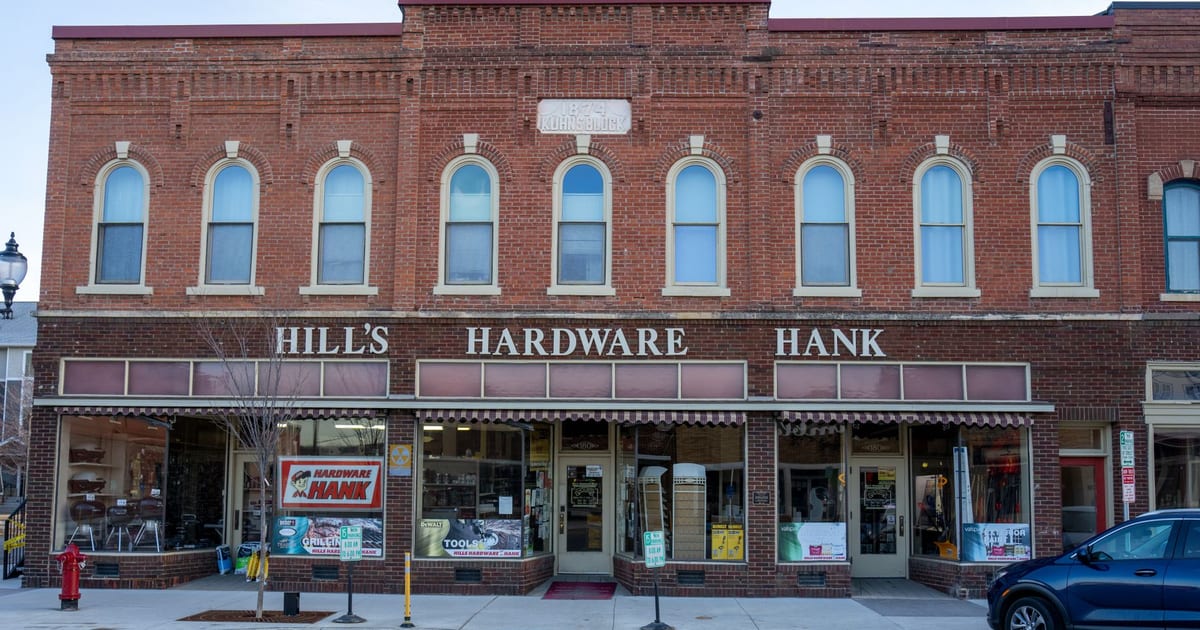
The first question is narrow and legal: which entity promised to pay, and what else does that entity own? A storefront carrying a national logo can be leased by the corporate parent, by an operating subsidiary, by a franchisee with a handful of locations, or by a single-purpose entity formed to hold one lease. Those four counterparties look identical from the parking lot and behave nothing alike.
The answer is on the signature page and in any guaranty attached to the lease, and it takes minutes to find once someone looks. A lease signed by the corporate parent puts the whole enterprise behind the rent. A lease signed by a subsidiary puts only that subsidiary behind it, unless a separate guaranty from the parent says otherwise, and the scope of that guaranty is its own question. Some are full and continuing for the term. Some are capped at a stated dollar amount, some burn off after a period of performance, and some evaporate on assignment.
Franchise concepts are where this matters most, because the brand and the obligor are structurally separate by design. A quick service restaurant operating under a well-known name may be leased by an operator running ten units in two states, and the franchisor has no obligation to pay that operator's rent. That is not a defect. It is a different credit, and it should be priced and underwritten as one.
Two documents settle the rest. An estoppel certificate signed by the tenant at closing confirms the rent, the term, and whether the tenant believes any obligation is outstanding. Any assignment history shows whether the original signer is still on the hook, because a lease assigned with a release transfers the obligation to somebody new. Reading the guaranty is the cheapest work in this category and the most commonly skipped.
How to Check the Obligor's Financial Strength
Once the obligor is identified, the question becomes whether that entity can pay for the remaining term. Three sources answer it, in descending order of availability: published credit ratings, public financial filings, and privately furnished statements. Most net lease diligence stops at the first, which is the least specific of the three.
Ratings are a useful coarse filter. S&P Global Ratings treats BBB- and above as investment grade, and Moody's uses Baa3 as the equivalent threshold. A rating is an opinion about the rated entity's probability of default, produced on the rating agency's schedule rather than the buyer's, and it covers the rated entity only. If a subsidiary signed the lease and the parent carries the rating, the rating is describing a company that has not promised anything.
Public filings are more specific and underused. Where the obligor or its parent files with the SEC, the annual and quarterly reports carry segment results, store counts, closure plans, and debt maturities, and EDGAR full-text search covers filings back to 2001. Store count trend and announced closure programs are the two items most directly relevant to a landlord, and they are stated in plain language rather than buried in a ratio.
Non-rated and private obligors require asking. A creditworthy private operator will usually furnish financial statements under a confidentiality agreement, and a refusal is itself information. The useful items are liquidity, existing debt service, and how many locations the operator runs, because a ten-unit operator losing money at two of them is in a materially different position than a two-unit operator in the same situation.
Pricing already reflects the market's collective view of all this. The Boulder Group's Q2 2026 National Net Lease Report put overall single tenant net lease cap rates at 6.82%, with retail at 6.60%, industrial at 7.25%, and office at 7.90%. Those are sector averages, and the spread between the strongest and weakest tenants inside each sector is wider than the gap between the sectors themselves.
Rent Coverage: Whether the Store Can Afford Its Own Rent
Corporate credit tells you whether a tenant can pay. Rent coverage tells you whether it will want to. Coverage compares the rent at one location against what that location sells, usually expressed as rent divided by annual store sales and often called an occupancy cost ratio. It is the single best predictor of renewal, because renewal is a store-level decision made by people looking at store-level numbers.
There is no universal threshold, and anyone quoting one across property types is overreaching. Acceptable occupancy cost differs sharply between a quick service restaurant, an auto parts store, a discount retailer, and a pharmacy, because their margins and sales per square foot differ. What travels across all of them is the direction of the number and the size of the cushion. A ratio drifting upward over three years describes a location losing ground even while the rent arrives on time.
In a hypothetical illustration using round numbers chosen for arithmetic rather than drawn from any transaction, a store producing $2,000,000 in annual sales and paying $120,000 in rent carries a 6% occupancy cost. If sales fall to $1,500,000 while contractual escalations push rent to $135,000, the ratio moves to 9%. Nothing was missed, no payment was late, and the renewal conversation has changed completely.
Whether any of this is knowable depends on one clause. Many single-tenant leases include a sales reporting covenant, and some do not. Where reporting exists, the seller has the history and a buyer should ask for it. Where it does not, proxies have to substitute: traffic counts, the age and condition of the buildout, whether the tenant has recently remodeled, and how many competing locations of the same concept sit within the trade area. Those are weaker signals, and a deal priced as though coverage were verified when it was not is a deal carrying an unpriced assumption.
What the Lease Reveals About the Tenant's Intent
A lease is a record of what each party negotiated for, and what a tenant asked for says a great deal about how it views the location. Four provisions carry most of that signal, and all four are readable before an offer is made.
Renewal options come first. Options almost always sit with the tenant rather than the owner, so they are a one-way right: exercised where the location works, abandoned where it does not. What matters is the option rent. An option priced well below what the space would command at expiration is a concession made years ago that the current owner inherits, and it caps value at exactly the moment the term is running short.
Recent capital spending is the second and the most honest. A tenant that has remodeled a store, expanded it, or extended the term early has spent its own money on a location it intends to keep. That is a considerably stronger signal than a credit rating, because it is a decision rather than an opinion.
Go-dark rights and continuous operation clauses are the third. A tenant permitted to close the store while continuing to pay rent can hand an owner a performing lease on a dead location, which collects on schedule until expiration and then becomes very hard to re-lease. A continuous operation covenant limits that, and its absence is worth noticing rather than assuming.
Assignment and subletting provisions are the fourth, because they govern who the tenant is allowed to become. A lease permitting assignment without a release and without landlord consent can substitute a weaker obligor for the one that was underwritten. The related question of which obligations the owner keeps regardless of tenant behavior is covered in the guide to which landlord duties survive a lease marketed as triple net, and the expense allocation underneath it in who pays taxes, insurance, and maintenance under each lease type.
What Happens to the Lease if the Tenant Files for Chapter 11
Credit analysis exists because of this scenario, so it is worth knowing what the downside actually looks like rather than treating bankruptcy as a single catastrophic word. A lease is an executory contract, and a Chapter 11 debtor gets to decide whether to keep it, on a statutory clock, with the landlord's remedies limited by the Bankruptcy Code.
The clock is set by Section 365(d)(4). An unexpired lease of nonresidential real property is deemed rejected unless the trustee assumes or rejects it by the earlier of 120 days after the order for relief or the date an order confirming a plan is entered. A court may extend that period by 90 days for cause on motion of the trustee or the lessor, and any further extension requires the lessor's prior written consent. In practice this means a landlord learns within a few months which side of the line a location falls on.
Assumption favors the landlord and is not the end of the matter. Under Section 365(f), a debtor that assumes a lease may then assign it despite provisions in the lease restricting assignment, provided the lease is assumed and adequate assurance of future performance by the assignee is given. A strong location can therefore be sold to an operator the original underwriting never contemplated.
Rejection is where the loss is quantified. Section 502(b)(6) caps a lessor's claim for damages from termination at the rent reserved under the lease, without acceleration, for the greater of one year or 15 percent, not to exceed three years, of the remaining term, plus any unpaid rent already due. The practical effect is that fifteen years of remaining contractual rent does not become a fifteen-year claim, and whatever claim survives is unsecured and paid in the case's own currency.
That statutory geometry is the reason credit work is front-loaded in this asset class. The remedies after a failure are bounded by statute. The choice of counterparty beforehand is not.
A Working Sequence
Run in order, the analysis is short, and each step decides whether the next one is worth performing. Most deals that should be declined are declined in the first two.
- Identify the obligor. Read the signature page and any guaranty, note whether the guaranty is full, capped, or expiring, and confirm whether the original signer was released in any assignment.
- Underwrite that obligor. Pull the rating if one exists for the correct entity, read the filings if it is public, and request statements if it is not.
- Check coverage at this store. Ask for sales reporting history where the lease requires it, and substitute traffic, condition, and competitive proximity where it does not.
- Read the lease for intent. Option rents, recent tenant capital, go-dark rights, continuous operation, and assignment terms.
- Price the downside. Estimate what the building is worth vacant, what re-tenanting would cost and take, and what a capped claim would be worth if the lease were rejected.
Investors reaching net lease through a pooled vehicle rather than by buying a building perform a different version of this work, since the lease review belongs to the sponsor. The questions translate directly into questions about process, which is part of what the diligence described in the passive investor position involves.
Freedom Commercial Real Estate is a Dallas-based commercial real estate firm that publishes investor education, and this guide exists because tenant credit gets summarized as a logo and a rating far more often than it gets worked through. A question about anything above, or a lease provision worth taking apart next, is welcome at info@freedomcre.net, and the guide to net lease structure linked earlier is the natural next read.
Frequently Asked Questions
Q: What does investment grade mean for a net lease tenant?
A: It means a rating agency has assigned the rated entity a rating at or above a defined threshold, BBB- at S&P Global Ratings and Baa3 at Moody's. It is an opinion about that entity's probability of default, published on the agency's own schedule. It is not a statement about the store, the location, or the likelihood of renewal, and it applies only to the entity actually rated.
Q: How do I find out who really guarantees a net lease?
A: Read the lease signature page and any guaranty attached to it, then check the assignment history. The relevant facts are which entity signed, whether a parent guaranty exists, whether that guaranty is full or capped in amount or duration, and whether an earlier signer was released on assignment. A tenant estoppel certificate collected before closing confirms the current position in writing.
Q: What is a good rent coverage ratio for a retail net lease tenant?
A: There is no single number that applies across concepts, because acceptable occupancy cost differs between quick service restaurants, auto parts stores, pharmacies, and discount retail. What transfers is the trend and the cushion. A ratio rising over several years signals a location losing ground even while rent is paid on time, and a ratio that can only be estimated because the lease requires no sales reporting is an assumption rather than a finding.
Q: What happens to my lease if the tenant files for bankruptcy?
A: The debtor decides whether to assume or reject it. Section 365(d)(4) requires that decision by the earlier of 120 days after the order for relief or confirmation of a plan, extendable by 90 days for cause and beyond that only with the lessor's written consent. An assumed lease can be assigned despite restrictions if adequate assurance of future performance is provided, and a rejected lease leaves a claim capped by Section 502(b)(6).
Have a question about what you just read? Freedom Commercial Real Estate publishes these guides as investor education. Send the team your question, or keep reading below.
Get The Freedom Brief in your inbox
On the 15th of each month: the three guides most worth your time, the month's series, a stewardship reflection, and one sourced number. Education only, never a sales pitch. Unsubscribe any time.
This article is for informational purposes only and is not an offer to sell or a solicitation of an offer to buy any security, nor investment, tax, or legal advice. Any offering is made only through official offering documents to verified accredited investors. Past performance does not guarantee future results.